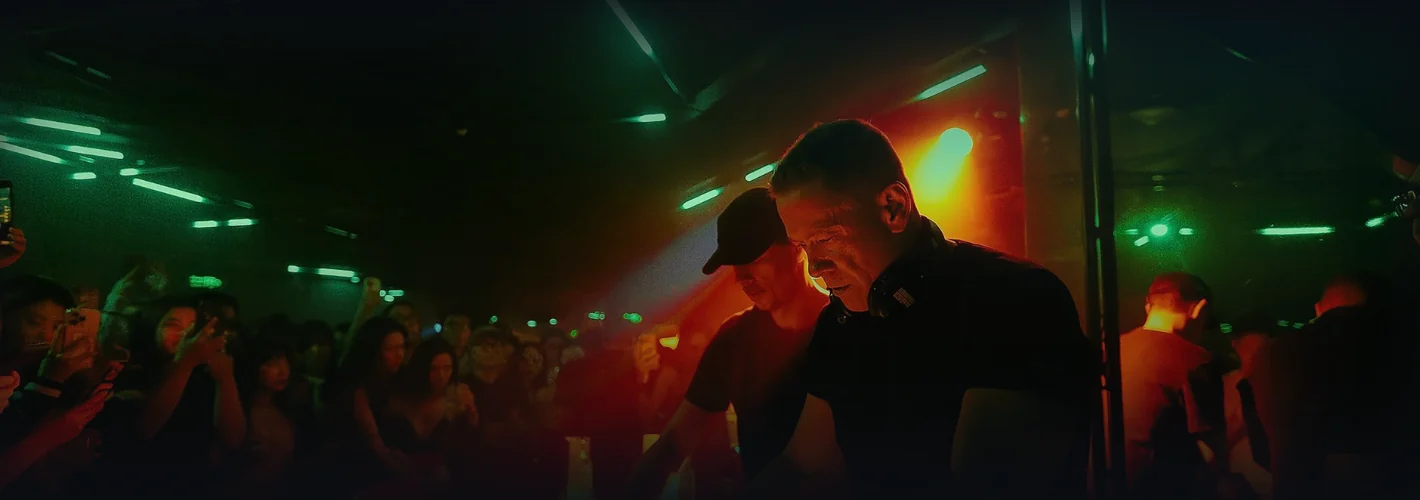
Tech house in 2026: the king that won't drop the crown
Some trends explode and fade in a couple of seasons, and some genres just stay. Tech house is firmly in the second camp. According to Beatport's sales reports, it closed out 2025 as the platform's best-selling genre and opened 2026 in the same spot, with names like Mau P, Cloonee, Prospa and the ever-present Fisher pushing the charts. That's no accident: it's the format played most in Western clubs and festivals, and that translates directly into downloads.
For a DJ the takeaway is clear. It doesn't matter whether your night leans melodic, afro or hard: sooner or later you'll need tech house, if only as a bridge. It's the common language of the dancefloor. In this guide we cover what it actually is, why it dominates sales and, above all, how to program it smartly so it pays off in every stretch of the night.
What tech house actually is
Tech house is, literally, the crossover between house and techno. It takes the rolling groove and swing of house —that four-on-the-floor that pulls you to dance without thinking— and combines it with the rawness, hypnotic repetition and bass weight of techno. The result almost always lives between 124 and 128 BPM, an extremely comfortable range for mixing long hours without the tempo feeling forced.
What makes it so functional is its tool-like character. A good tech house track doesn't chase a radio hook; it's built to roll, to hold energy and to give you room to mix over it. That's why so many releases in the genre feel more like toolboxes than albums to play at home. A compilation like Nothing But... Tech House Vibes, Vol. 15 illustrates that approach well: 25 tracks built to work inside a mix, not to stand alone. And its follow-up, Nothing But... Tech House Vibes, Vol. 16, keeps the same logic of useful, booth-ready material.
Several accents coexist under the umbrella. There's the rollier, more minimal side, close to minimal/deep tech, and there's the punchy side built for the night's peak. Editions like Nothing But... Peak Time Tech House, Vol. 15 aim straight at that maximum-energy moment, while Nothing But... Prime Tech House, Vol. 06 sits in the prime zone, that central stretch where the floor is already hot but not yet at its climax.
Why it has dominated sales for years
It's the sound of the big club names
Tech house is the format that best translates the energy of a packed club into a downloadable file. The top-selling Beatport artists in this lane —the Fishers, Chris Lakes, Mau Ps and Cloonees of the moment— built enormous careers precisely on tracks made for the floor. When a DJ hears one of those tracks at a festival, they look for it the next day, and that demand cycle is what keeps the genre on top year after year.
It's the wildcard that connects genres
Another reason for its dominance is how well it talks to everything else. Its tempo and groove make it the natural bridge between softer house and harder techno, between the melodic and the percussive. That's why it shows up blended across so many catalog releases: Robats - Glowal, for example, mixes tech house with indie dance and melodic house & techno across 21 tracks, and Excuse Me - Intaktogene combines it with electro and indie dance. That versatility is exactly what a DJ needs to avoid getting boxed into a single color.
It works for charts and for whole sets alike
Tech house also dominates the logic of DJ charts, those short selections artists publish with what they're currently playing. Feel The Heat Chart - JOTA (ES) is a good example: ten tracks crossing tech house, bass house and jackin house, the kind of compact selection a DJ uses to tell you exactly what's working for them on the floor right now.
How to program it: from the warm-up to prime time
The great strength of tech house is that it covers almost the whole arc of the night, but that doesn't mean anything goes at any moment. The key is choosing the right accent for each stretch.
- Warm-up: open with rolling, low-key tech house, closer to deep or minimal. The idea is to settle the groove without spending energy. A varied roundup like Weekend Picks House 2026: Week 19 —28 tracks ranging from deep house to tech house— gives you plenty of material for that first hour when the floor is still reading the room.
- Prime zone: once the room has responded, move up to more defined tracks with more bass body. This is where the prime editions and tracks with a sharper drop come in, keeping people moving without triggering the climax yet.
- Prime time / peak: save peak time tech house for the maximum-energy moment. These are the punchiest tracks, with dry percussion and bass that hits you in the chest. Use them with intent: drop them all at once and the floor flattens out.
One resource worth gold for programming is listening to what other DJs are already selecting. Charts like May 2026 Chart - Randy Seidman, which crosses tech house with organic, afro and melodic, show you how an experienced selector spreads energy across a set. Not to copy them, but to understand the logic of the flow.
Build your tech house base smartly
If you're going to build a solid collection, the mistake is downloading everything with no order. What works is separating by function from day one: a folder of rollers for the warm-up, one of body for the prime zone and one of peak weapons for the climax. That way, in the booth, you're not searching blind: you read the floor and pull the right card.
To get started it's smart to combine two things. On one hand, big themed compilations that give you volume fast —the Nothing But series are ideal for that. On the other, high-quality albums and EPs that bring distinctive pieces; a FLAC release like VA - Two Years of Junked Groove, which runs through tech house, house, minimal/deep tech and deep house, adds exactly the kind of tracks with character that break the monotony of a too-uniform set.
The usual advice: download in 320 kbps or FLAC, tag by energy and function, and check the charts every month to keep the rotation fresh. Tech house isn't going anywhere —Beatport's data confirms it season after season— so it's worth investing in organizing it well. It's the genre you'll use the most; treat it like the backbone it is.
Source: Beatportal — "Tech House: The Top-Selling Tracks, Artists, and Labels of 2025".