
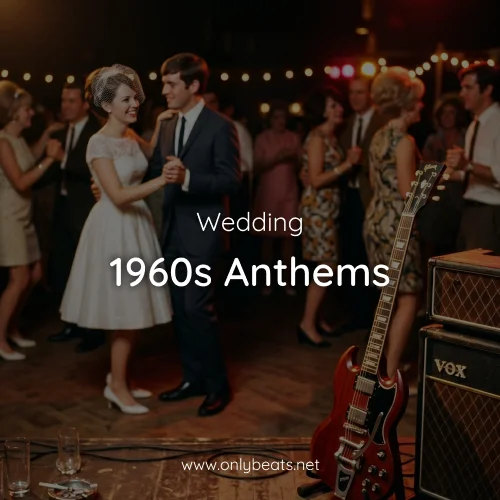
Wedding Anthems 1960s: The Ultimate Dance Floor Toolkit for Wedding DJs
Beatport welcomes a release that breaks from its usual electronic catalogue logic: Wedding Anthems 1960s is a 34-track package designed exclusively for wedding DJs, event specialists and themed night curators, built around the most universally recognised classics of soul, R&B, rock and roll and pop from the 1960s. Rather than remixes or electronic edits, the real value here lies in having both original masters and intro-ready versions under one roof, fully prepared for professional DJ integration.
Structure and Editorial Logic
Every classic comes in two formats: the original or remastered version alongside an intro version crafted to facilitate beatmatching and smooth transitions in the booth. This dual approach is remarkably practical, allowing DJs to build anticipation before dropping the full track. Tempos range from 66 BPM on Marvin Gaye and Tammi Terrell's Ain't No Mountain High Enough (Mono Version - Intro) all the way up to 159 BPM on Dion's Runaround Sue, offering a full dynamic arc to manage crowd energy throughout the night.
Standout Tracks
- Respect (Original Mix) – Aretha Franklin (114 BPM, C Major): An absolute anthem. Compact, functional, and irresistible on any dance floor.
- I Want You Back (Intro) – Jackson 5 (99 BPM, Ab Major): One of the most recognisable hooks in pop history, with an intro version for a flawless drop.
- Shout, Pts. 1 & 2 – The Isley Brothers (140 BPM, F Major): Tagged as Nu Disco, this is the highest-energy cut in the pack and the one a skilled DJ can truly exploit.
- Proud Mary – Ike & Tina Turner (96 BPM, D Major): Nearly five minutes of powerhouse soul that justify the entire compilation on their own.
- Come On Eileen – Dexys Midnight Runners (104 BPM, A Minor): The ultimate crowd-pleaser for any celebration's peak moment.
Technical Notes and Context
Worth flagging is the genre classification applied to certain titles on Beatport: Ain't No Mountain High Enough, The Twist, Proud Mary and Let's Twist Again are all tagged as Trap / Future Bass — a categorisation that is clearly incorrect from both a historical and sonic standpoint, likely the result of distributor-side algorithmic tagging. The labels represented include catalogue heavyweights such as Motown, Rhino Atlantic, Epic/Legacy, Capitol Records and Polydor, confirming properly licensed material and assured audio quality.
All in all, Wedding Anthems 1960s is not a release that will shift the needle in the electronic music scene — nor does it try to. It delivers precisely what it promises: a solid, well-curated and immediately useful toolkit for professional event DJs.