
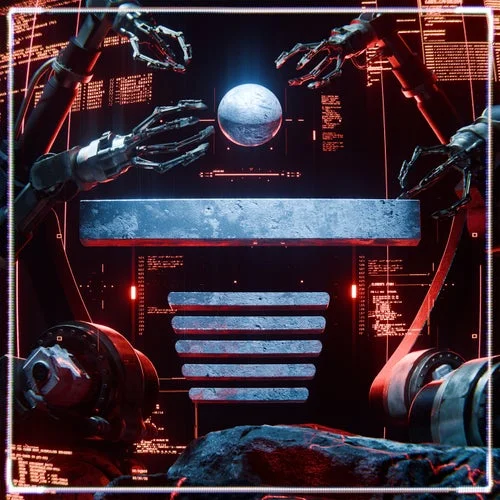
On The Infrastructure 4.0, Massano’s name acts as a frame for a collaborative repertoire, while Simulate Recordings places every piece in melodic house & techno. The tempo architecture stays compact, ranging from 123 to 131 BPM. Oscar L and Ignacio Arfeli open with “I Want This” at 130 BPM, C major and 5:20; Tomas Otero follows with “Pressure” at 131 in E minor and 5:55. These are the two highest speed values, positioned before Soel lowers the figure to 128 BPM on “Uruk.”
From there, the order explores a 124–128 BPM zone through changes of key and duration. CENKK returns to C major at 126 with “Rockin’ Beats”; Mila Journée, Abstraal and Arcuri (AR) work in A major at 127 on “XTAA6”; Cloz, RIKO & GUGGA and Saintglum move to D major at 128 on “Make Money, No Friends,” the longest piece at 6:03. Humans Musik and buddy95 place “Keep It Like That” in G major at 128, before Mark Hoffen with Bittermind, Clér Letiv with Vaderat and Øostil with ALIAGA (ofc) string together three 124 BPM entries.
That 124 BPM block also has an internal tonal relation: “Colure” and “Leopard Interference” share D-flat minor, although their durations are 5:23 and 4:44. David Lindmer returns to G major with “Last Night,” and KYBA (UK) opens a D minor zone on “I Sleep Better.” Kiko with Olivier Giacomotto recover D major on “My Darkside,” while SLVR and Yubik return to A major for “The Business.” These coincidences do not describe sound on their own, but they provide clear points for selecting or joining material by key and BPM.
The ending sharpens the shared-repertoire idea. Citizen Kain signs the low point of 123 BPM with “Journey,” in C major at 5:08; Glowal and Massano close with “Future Generation” at 128 BPM, E major and 4:31. Massano’s presence in that final credit connects the close to the compilation title. Across solo tracks, duos and three-name collaborations, The Infrastructure 4.0 is arranged as a narrow-range programming tool, held together by precise changes in key, duration and authorship.